Loading...

Romina Caro
@romina-caro
Romina explores alternative pedagogies, including Waldorf education, which emphasizes emotional and spiritual development alongside academics. She prioritizes the importance of creating safe, nurturing environments where children can grow with confidence and connect with the wonder and amazement of world around them.
Member since May 20261 lab
My Experience
Loading map...
Resources (12)

Notes & Advice
Mentors & Teachers
"Someone must have thought about it before. Steiner, the creator of the Waldorf pedagogy, says that the child has to form his physical body, and to form a strong physical body, the child needs to feel safe. Finding Montessori pedagogy, and finding the freedom of the child, allowing the child to choose what they like. Then you say, well, there is something different."

Notes & Advice
Being In Nature
"It is important that we feel like part of the earth at this moment and of the universe, because if we do not feel a part, then you have things like the environmental crisis, because we cannot take care of something that we do not feel a part of. So we are having a hard time taking care of our environment, our land, because we feel that trees are merchandise instead of something that is there to amaze us."

Notes & Advice
Inner Child & Subconscious Work
"For me, school was always a very safe place, a place where I felt good. Sometimes in my house, there were problems, family fights, but at school, there were always the teachers, there was always that support and safety. I think that search came from there, at some point, of saying, well, I want to create a safe space for these children and not a space of stress, which schools often become."
Website
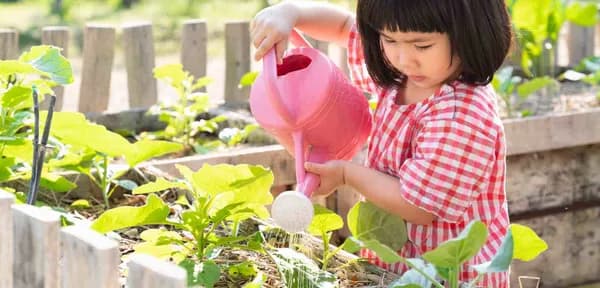
Discover Waldorf Education | Purposeful, Holistic, and Inspired Learning | AWSNA
Delve into Waldorf education, a transformative approach fostering lifelong learners through arts-integrated academics. Founded on Rudolf Steiner's principles, Waldorf schools prioritize holistic development, creativity, and ethical thinking from preschool to 12th grade. Discover the impact and unique pedagogy of Waldorf education today!

Notes & Advice
A Vision
"In the Waldorf pedagogy, spirituality is done as a broader question, which has to do with recognizing ourselves as part of the whole, with recognizing ourselves as part of everything. There are no instructions for teaching the spiritual. I am not talking about reading the Bible to them, but instead being amazed at being alive, at having a body, being amazed at my surroundings, observing nature, and feeling part of that. Beauty has to do with the spiritual. Being amazed by beauty is something of the spirit. In the second seven-year period, from 7 to 14, the world should be beautiful because at that age, you only learn about what seems beautiful, about things that amaze us."

Notes & Advice
Focus On Something Bigger Than Yourself
"The objective is that children themselves bring out the best in themselves, not me bringing it out, but that they can have the circumstances and the continuity that they need while bringing out the best in themselves throughout their life. It is important that we feel like part of the earth at this moment and of the universe, because if we do not feel a part, then you have things like the environmental crisis, because we cannot take care of something that we do not feel a part of."

Notes & Advice
Self-Reflection
"The whole process was also about thinking about myself, about what I needed, about my process, about what I had needed throughout my life, or what I would have liked. That process was accompanying my process as a teacher. When I discovered that it was also good to work on the emotional, I said in children too. When I discovered that the spiritual was important, I said in children too. But well, that is why it is a path, and in each pedagogy, I found different things."

Notes & Advice
Stay Curious & Open
"Since I'm very curious too, I started to study to find out, to learn about other pedagogies, always in search of a space that looks beyond the mind. Even those alternative pedagogies are oriented towards the child learning better, but not about their emotions, not about the spiritual. In that search, I went through many schools, many places, as if looking for something that would make me feel that the work I was doing was really what I had to do. It seems that every place I went, I took away different things and also understood different things about myself."

Notes & Advice
Be Courageous
"The biggest challenge in following my passion was listening to myself because the environment of teachers in which I found myself and society sees success in the amount of learning of boys and girls. It was always something that I felt inside myself but could not justify or find a way to explain. I always felt like my work was correct for my environment, but it only addressed one part of the child, which was the intellectual part. It was very difficult to listen to myself and say, well for me this is not right, and I'm going to look for someone, somewhere, who must have thought like me before. Steiner says that freedom and the need to belong are sometimes opposites. So I can't be free if I want to be valued. What was valid in my environment was not what I freely felt inside, so that contradiction, I think, was the biggest challenge."

Notes & Advice
Own Your Path
"My entire education was very intellectual, and my family is also very intellectual. You always had to study a university degree. Here in Argentina, to be a teacher, you don't have to go through a university degree, since it is a lower-level profession and it is not as socially recognized. I started to study for a university degree because it was what I felt I had to do. I did it for about four years, and it was very difficult because at that time I felt that I did not like the degree I was getting. At the time, I was also a nanny, and while I was studying at university, all I wanted to do was go back to taking care of the children. Finally, at one point, I said, well, this is my thing, this is what I want to do, and I left the other degree and started studying to be a teacher. But it was a moment of decision. All my family members are teachers, but university professors. They don't work with children, and working with children in Argentina is not as well regarded as working in university."

Notes & Advice
Luc Deaj Waldorf School (Argentina)
Luc Deaj Waldorf School (Argentina) - where she has been teaching for over 15 years, building the future of education.
Notes & Advice
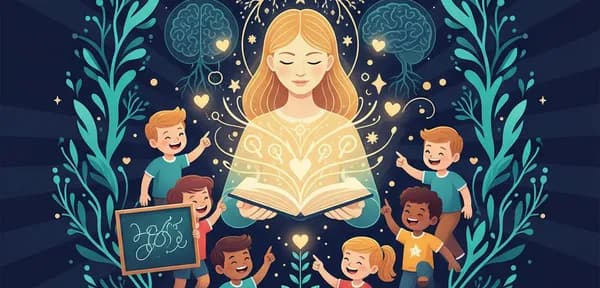
Follow Your Joy
"Working with children has always been my passion. Being a teacher has always been my passion. Since I was very young, when my sister was born, that was the first time I realized that I liked taking care of others. At five years old, when I learned to write, I asked for a chalkboard as a gift for Christmas. I gathered all the children in the neighborhood and taught them the same thing that my teacher taught me at school to the little ones. The mothers from the neighborhood were very happy because I took care of their children, helping them play and learn. I started working with children and it was like, yes, this is my thing, this is what I enjoy."