Loading...
Back to Purpose Lab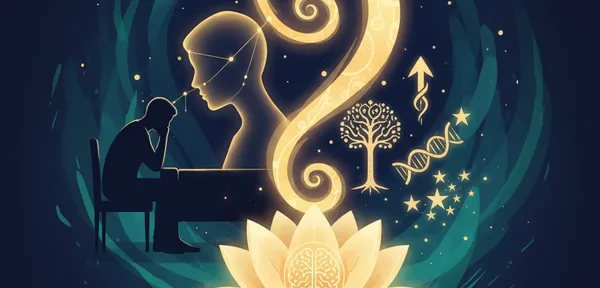
My biggest struggle with it was I wanted to be a scientist, a medical-career-oriented person. After high school, I went into college for that purpose, to study medicine, and eight years in I realized it wasn't giving me the feeling that this is reality. Not that it wasn't, I saw a lot of people doing good with their work in medicine. But I realized after a friend was diagnosed with HIV/AIDS in 1992, and his question to me, 'Am I going to die?' I said, 'We all will, but what are you really asking? How well do you want to live with whatever time we have?' So I started that conversation, and in three years, between the time he was diagnosed and when he died in 1995, his purpose was fully realized, and mine. I went to visit with him, and he was sleeping, and I thought, I would leave him, I'm not going to interrupt his sleep. So I was turning to leave, and he spoke, 'You better do what you're here to do.' I turned around and looked at him, and he was still sleeping. I thought, no, I knew I heard his voice. So I'm looking at him now, sleeping, and I asked, 'What did you say?' And he spoke, 'You heard me. You better do what you're here to do.' And I'm thinking, everything that I know is being changed right now because he is asleep, and yet he's speaking. What is this? So I asked, 'What am I here to do?' And he said, 'Don't play games with me. You know what you're here to do, and if you don't do it, you will regret it.' And I put the chair back by the bed, and I sat there and asked myself, 'What am I here to do?' I sat there and dissolved my intention of being that, and recovered my awareness. So when my friend Lazar woke up, he looked at me and he said, 'They don't know the kind of doctor you're supposed to be.' Then I started Shri Multicultural Foundation a month later, resigned from pursuing a career in medicine in that form, but found my teachers right after that to support what I really wanted to be engaged with.
🎉 Fun
Related Methods
Life-Changing Event